
Fire Protection Systems & Services in Malaysia
Fire alarm, suppression and fire fighting systems designed, installed and upgraded for commercial and industrial buildings.
From new building installations and fire protection system upgrades to corrective works following inspections, DZNC designs, installs and commissions fire protection systems tailored to each building’s use, stored materials and occupancy.
Understanding Fire Protection Systems
Fire protection systems help detect fires, alert building occupants and control or suppress fires. They include fire alarms, sprinklers, hose reels, dry and wet risers, portable fire extinguishers and specialised suppression systems. Fire-rated doors and pressurised staircases also help prevent the spread of fire and smoke.
The Importance of Fire Protection Systems
- Meet Building Requirements: Fire protection provisions under the Uniform Building By-Laws (UBBL) depend on the building’s use, height and applicable requirements.
- Protect Building Occupants: Early detection and appropriate fire protection measures help occupants respond to emergencies and evacuate safely.
- Prepare for BOMBA Inspections: Proper system design, installation, testing and maintenance help demonstrate compliance with applicable fire safety requirements.
Our services
01
Fire Detection, Alarm & Protection Systems
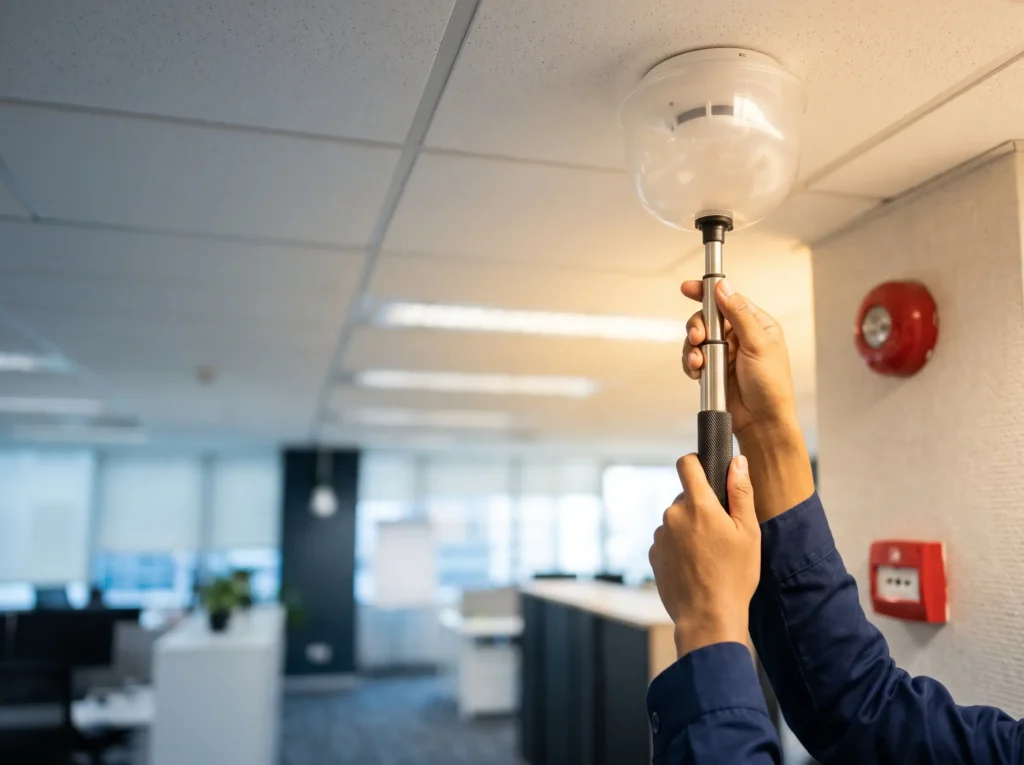
Design and installation of fire alarm systems and other fire protection systems, planned around each building’s layout, use and occupancy so that a fire is detected early and occupants are warned in time.
- Fire alarm panels, smoke and heat detectors, and manual call points
- Pressurised staircase systems
- Hose reels, risers and hydrants
- Sprinkler systems
- Fire-rated doors
Suitable for: Office towers · Factories · Hotels · Shopping centres
02
Fire Suppression Systems
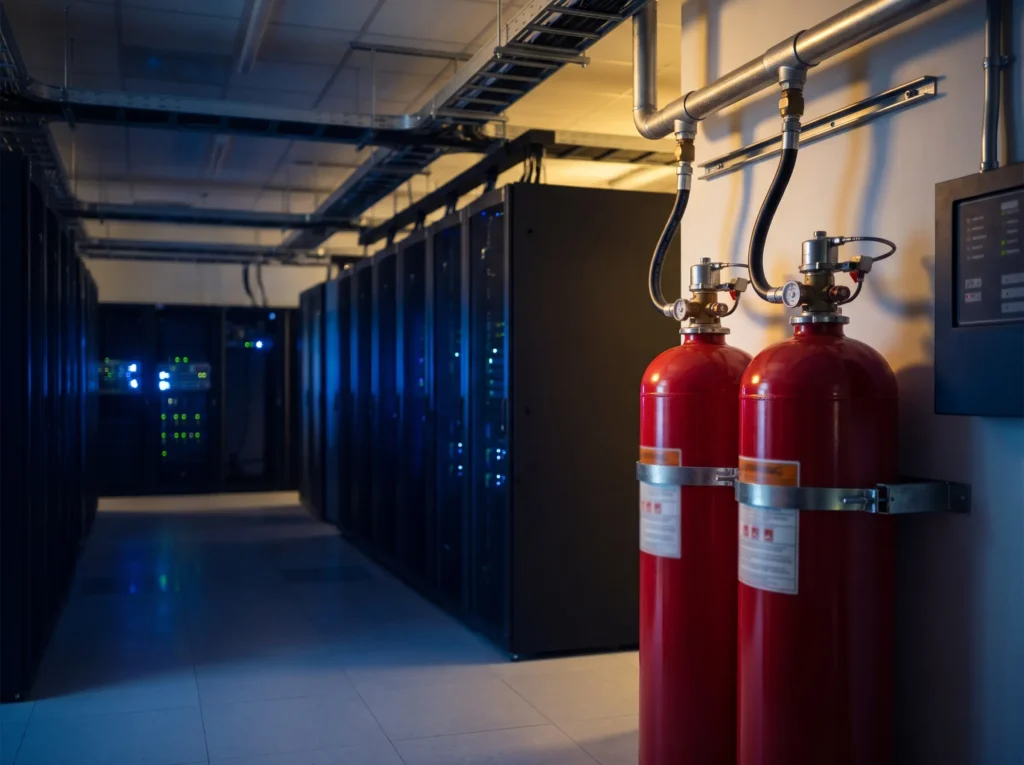
Automatic fire suppression systems for rooms where water would cause damage or would not be effective, such as server rooms, electrical rooms and commercial kitchens.
- FK-5-1-12 clean agent suppression systems
- Wet chemical systems for commercial kitchens
- Design, installation and commissioning
- Servicing and refilling
Suitable for: Data centres · Server and electrical rooms · Restaurants and hotel kitchens
03
Fire Fighting Pump Alignment & Testing
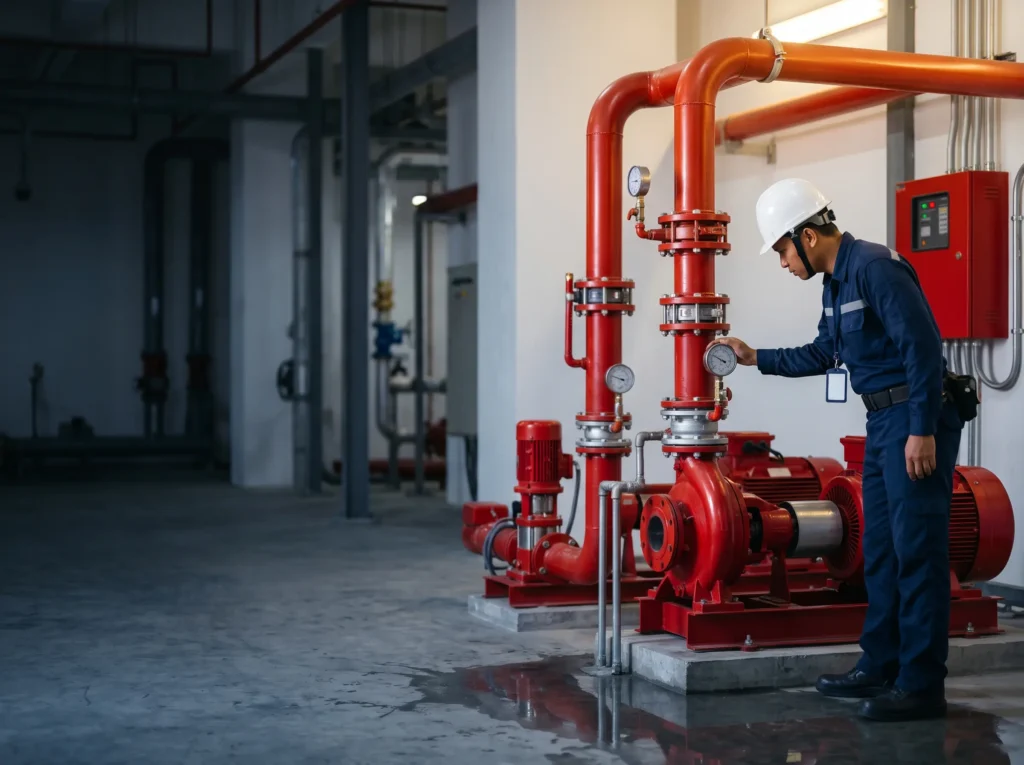
Reliable fire pump performance is essential to maintaining the water supply required during a fire emergency. Regular checks help identify performance issues and support ongoing system readiness.
- Duty, standby and jockey pump alignment
- Functional and automatic start tests
- Pressure and flow checks
- Test report for maintenance and Fire Certificate records
Suitable for: High-rise buildings · Factories · Buildings with sprinkler or hose reel systems
06
Construction & Building Services
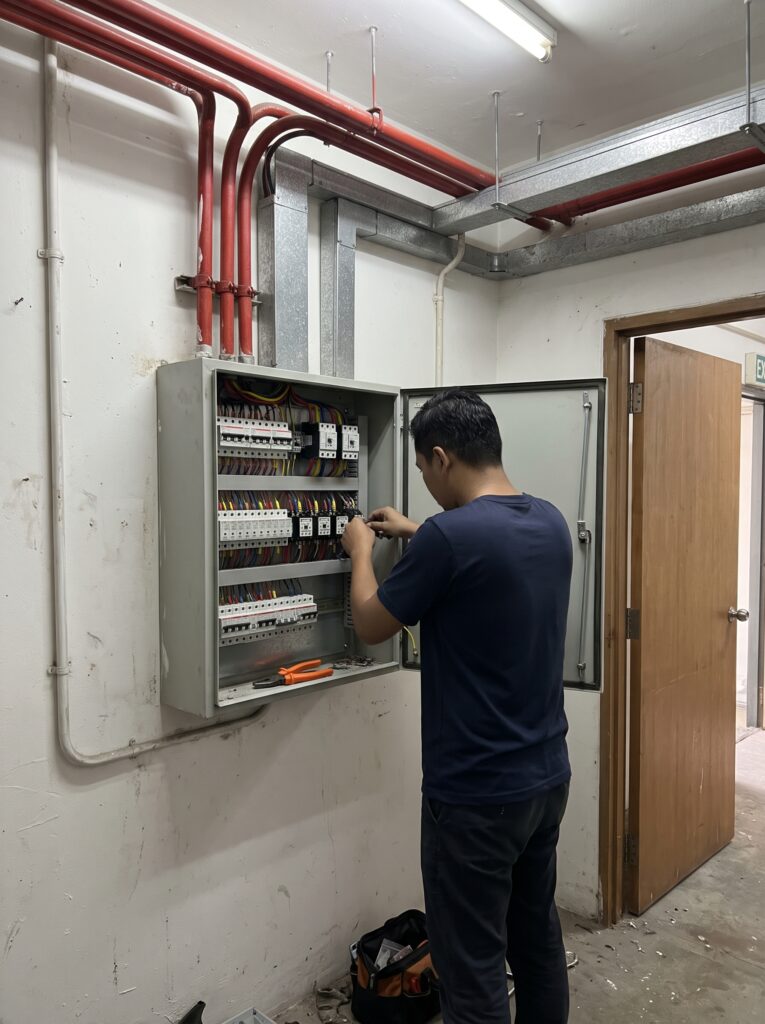
Installation of PA and voice evacuation systems, security systems and electrical wiring, carried out alongside fire protection works so that all systems work together.
- Security systems
- PA (public address) and voice evacuation systems
- Electrical wiring and installation works
Suitable for: New buildings · Renovations · Fit-out projects
Understanding the Installation Process
Site Survey
Each project begins with a visit to the building, to understand how it is used and what protection is already in place.
Design & Proposal
A system is then planned around the building’s needs, with the scope, timeline and cost set out clearly from the start.
Installation
Works are carried out according to the agreed plan, and scheduled to keep daily operations running as smoothly as possible.
Testing & Handover
Before handover, the system is fully tested, and the drawings and records are provided for future maintenance and the Fire Certificate.
Frequently Asked Questions?
What types of fire fighting systems are used in buildings?
Common systems include fire alarm and detection, sprinklers, hose reels, dry and wet risers, hydrants, fire pumps, suppression systems and portable extinguishers, plus passive measures such as fire-rated doors and pressurised staircases. The systems required depend on the building’s height, size and use.
How does a fire alarm system work?
Smoke and heat detectors, together with manual call points, send a signal to the fire alarm control panel. The panel sounds alarms throughout the building, shows which zone is affected and can trigger connected systems such as stair pressurisation fans and voice evacuation messages. In larger buildings, the system is monitored from a Fire Command Centre that connects automatically to the nearest fire station (UBBL By-law 238), and buildings requiring a Fire Certificate are linked to BOMBA through the Automatic Fire Monitoring System (SPKA).
What is the difference between active and passive fire protection?
Active fire protection uses manual or automatic systems to detect, warn of and fight a fire, such as fire alarms, detectors, hose reels, sprinklers, smoke control and suppression systems. Passive fire protection is built into the building itself, such as fire-rated walls, floors and doors that divide the building into compartments and slow the spread of fire and smoke. Both are shown in a building’s fire protection drawings submitted to BOMBA, and an effective fire safety design relies on the two working together.
What is a clean agent fire suppression system?
A clean agent system automatically detects a fire in a protected room and releases an agent such as FK-5-1-12, which is stored as a liquid and turns into a gas instantly on discharge. It puts out the fire mainly by absorbing heat, does not conduct electricity and leaves no residue, so it protects server rooms, electrical rooms and archives without the water damage of sprinklers. At design concentrations it is considered safe for occupied spaces, and clean agent systems in Malaysia are designed to MS 1746 and NFPA 2001 [VERIFY].
What is a jockey pump?
A jockey pump is a small pump that keeps the fire protection pipework at its normal pressure, making up for small pressure losses so the main fire pump does not need to run. Malaysian sprinkler systems typically use a duty pump, a standby pump and a jockey pump. When a sprinkler or hose reel is used and the pressure drops further, the main fire pump starts automatically. Both pumps need regular testing and correct alignment to work when needed.
What is a PA system, and how does it support fire evacuation?
A PA (public address) system broadcasts announcements throughout a building. In Malaysia, UBBL By-law 239 requires a PA system and a fireman intercom in the buildings listed in the Tenth Schedule. When linked to the fire alarm as a voice evacuation system, it plays recorded evacuation messages automatically and allows live instructions through a fireman’s microphone. Spoken instructions get a much faster response than bells alone: one study found 75% of people responded to a voice message, compared with 13% to a bell.
Have a Questions?
Not sure where to start? Feel free to contact us. Our team is happy to help.
Telephone
Business Hour
Monday – Friday
8:30 a.m. to 6 p.m.